

How to Understand Custom Patch Pricing?
When it comes to ordering custom patches, one of the first questions that comes up is "How much will it cost?" Understanding the pricing structure for custom patches can be tricky, as there are various factors that influence the final price. These include the type of patch, size, quantity, design complexity, and additional features. Knowing what goes into the pricing will help you make informed decisions.
Custom patches are priced based on multiple factors, with the most significant being the type of patch (embroidered, woven, or PVC), the size of the patch, and the number of colors in the design. Custom patches are generally priced per unit, but the unit price can decrease as the quantity increases, making bulk orders a more economical choice. Additionally, some designs require more time or specialized equipment, which could increase costs.
Why Do Prices Vary for Custom Patches?
The price for custom patches can vary for several reasons. Here are the most common ones:
- Type of Patch: Different types of patches (embroidered, woven, or PVC) come with varying costs.
- Size: Larger patches require more material and time to produce, which can increase the cost.
- Design Complexity: Intricate designs require more time to stitch or weave, which can raise the cost.
- Quantity: Ordering in bulk usually results in a lower unit price due to economies of scale.
- Colors: The more colors in the design, the more costly the patch may be due to the added stitching or material complexity.
Custom Patch Pricing Breakdown
| Item | Description | Price Influencers |
|---|---|---|
| Patch Type | Embroidery, woven, or PVC patches | Embroidery is generally more expensive, while PVC and woven options may be more affordable depending on design. |
| Size | The physical dimensions of the patch | Larger patches require more material and time to produce, which drives up the cost. |
| Design Complexity | The detail of the artwork or logo | Intricate designs with many details or small elements cost more to produce due to the increased work required. |
| Quantity | The number of patches ordered | Ordering in bulk usually reduces the price per unit, as production costs are spread across many patches. |
| Colors | The number of colors used in the design | More colors typically increase the price due to the extra materials and labor involved. |
9 Key Factors Influencing Custom Patch Costs
- Patch Type: Embroidered, woven, or PVC will vary in cost.
- Size: Larger patches typically cost more due to material usage.
- Design Complexity: More detailed designs require more labor and specialized equipment.
- Colors: The more colors in the design, the more expensive it may be.
- Quantity: Bulk orders reduce the per-unit price.
- Patch Backing: Different types of backing (iron-on, Velcro, etc.) can influence the cost.
- Thread Type: Premium threads like metallic or specialty threads increase costs.
- Borders: Patches with intricate or custom borders tend to cost more.
- Rush Orders: If you need patches produced quickly, there may be an additional charge.
Budget Considerations for Custom Patches
Budget-Friendly Option
For those with a tight budget, opting for basic embroidered patches with fewer colors and smaller sizes can help keep costs down. Bulk orders will also lower the unit price, making it an ideal choice for businesses, sports teams, or organizations needing multiple patches.
Balanced Option
If you want a mix of quality and affordability, woven patches with medium complexity and up to 3 colors are a great option. They offer a good balance of quality and cost-effectiveness.
Premium Option
For the highest quality, choose custom PVC patches with intricate designs, multiple colors, and premium backing options. These patches are durable, eye-catching, and stand out, but come at a higher cost.
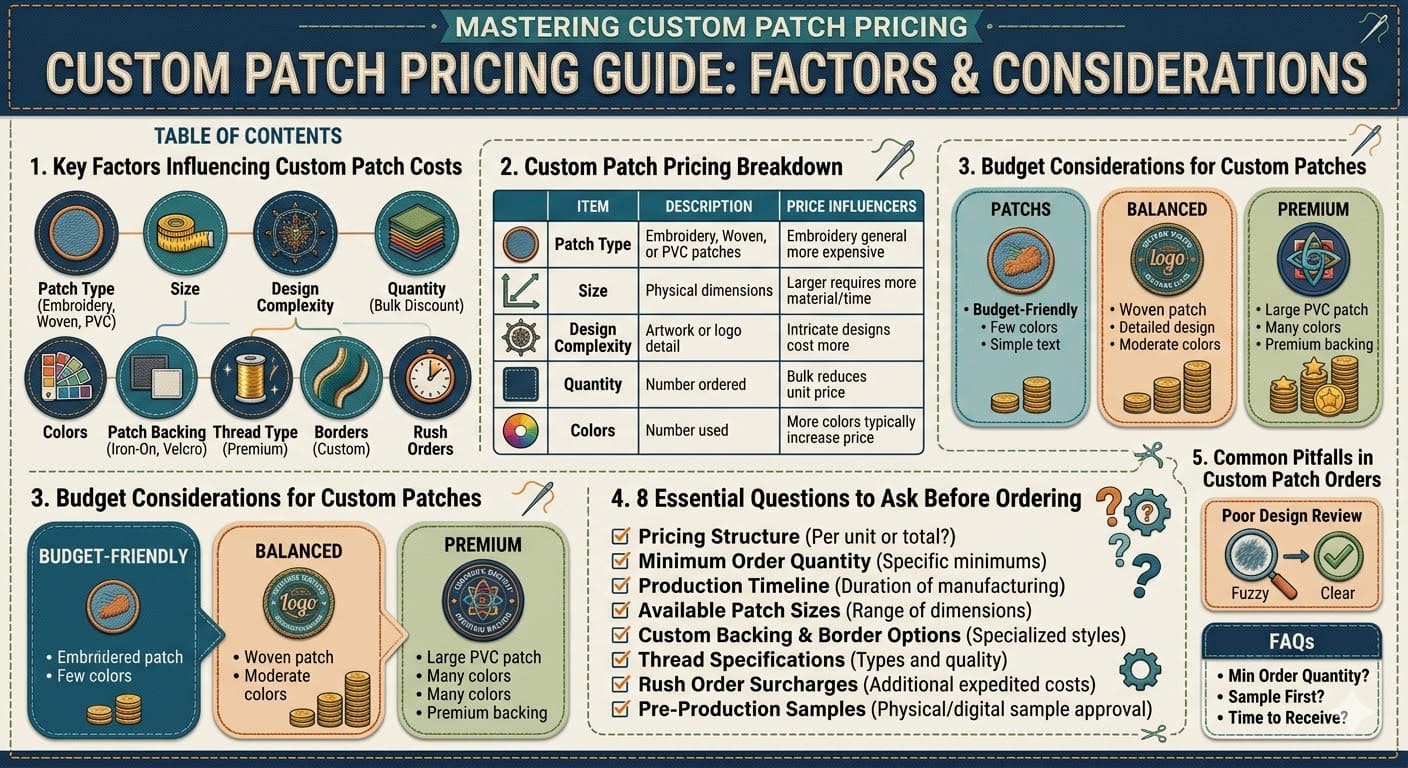
8 Essential Questions to Ask Before Ordering Custom Patches
- Pricing Structure Confirm whether the price is calculated per unit or per total order.
- Minimum Order Quantity Verify the specific minimum number of units required for an order.
- Production Timeline Establish the exact duration required for the manufacturing process.
- Available Patch Sizes Identify the range of dimensions and sizes offered for the patches.
- Custom Backing and Border Options Determine the availability of specialized backing materials and border styles.
- Thread Specifications Clarify the specific types and quality of threads used in the embroidery.
- Rush Order Surcharges Confirm any additional costs associated with expedited production and shipping.
- Pre-Production Samples Ensure a physical or digital sample is provided for approval before the full run.
Common Pitfalls in Custom Patch Orders
One common pitfall is not reviewing the patch design carefully before ordering. Small design flaws can result in an entirely different look on the final product. Always request a sample or proof before committing to a large order.
Custom Patch FAQs
What is the minimum order quantity for custom patches?
The minimum order quantity typically varies, but many suppliers offer a minimum of 50 patches per order.
Can I get a sample of my custom patch before placing a full order?
Yes, many suppliers will provide a sample patch or digital proof to ensure the design is accurate before proceeding with full production.
How long will it take to receive my custom patches?
The typical turnaround time for custom patches is 2-4 weeks, depending on the complexity of the design and the quantity ordered.